National park pass
The best travel deal in America
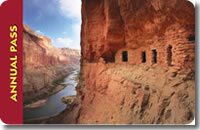 The America the Beautiful National park pass costs just $80 and gets you into more than 2,000 federally managed recreational areas—including 462 National Parks, from the Grand Canyon to the Great Smokies.
A case study in how well it works
In the summer of 2006 I watched Old Faithful spout four times, hiked around Jenny Lake under the craggy peaks of the Tetons, and drove into the sunset on the Going-to-the-Sun Road through Glacier National Park.
I also climbed the weird rock flutes of Devils Tower, scrambled the endless arroyos of the Badlands, and dodged buffalo, antelope, coyote, and prairie dogs along the road through Wind Cave National Park.
And I did all of it for free.
How much the parks pass costs
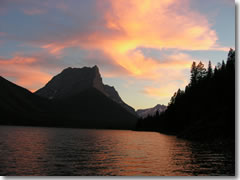
Sunset at Glacier National Park in Montana.
I got into all these public lands without paying a nickel because I was crossing the country with Boy Scout Troop 116, and the $50 National Parks Pass [2012 note: the price has since spiked to $80, and now they call it the America the Beautiful pass] they picked up in Colorado at the start of their summer odyssey had already paid for itself in saved admissions by the time the troop got to Oregon.
From the Grand Canyon to the Grand Tetons and the volcanoes of Hawaii to the Liberty Bell in Philadelphia, America's National Parks are its greatest treasures, and the paltry sum of $80 gets you into (almost) all 462 National Parks and Monuments for a full year—actually a bit longer, since a pass expires one year from the last day of the first month it is used—plus more than 1,500 other federal recreation areas. (Note: Seniors over 62 can pay just $10 for a lifetime pass!)
National Parks FREE!
About a half-dozen times a year, the National Parks Service has FREE ADMISSION DAYS so that everyone can celebrate the glory and beauty of our National Parks.
For 2012, those dates are:
• Jan 14–16
• Apr 21–29
• June 9
• Sept 29
• Nov 10–12
On these days, all 394 national parks, preserves, monuments, memorials, historic sites, etc. will be open FREE OF CHARGE to everyone.
Of course, many already are free, but 146 do charge admission, anywhere from $3 to $25. Heck, You could save $119 in Utah alone.
Learn more at www.nps.gov.While general admission at our National Parks ranges from hefty-but-fair ($25 each for the Grand Canyon, Glacier, and Yellowstone/Grand Tetons; $20 for Acadia, Bryce, Zion, and Yosemite) to downright inexpensive (Arches is $10, the Great Sand Dunes $3, and the Great Smokey Mountains are free), if you plan to visit more than two or three over the course of a year, the pass is a terrific bargain.
In Colorado, the boys of Troop 116 surfed down the Great Sand Dunes, a miniature Sahara of 750-foot dunes set incongruously against the Sangre de Cristo Mountains.
In Utah they scrambled around the delicate stone spans at Arches, explored the checkerboard mesa in Zion, and hiked among the striped rock pinnacles of Bryce.
The troop reached the Pacific Ocean in the same spot Lewis and Clark did: Fort Clatsop, Oregon at the mouth of the mighty Columbia River.
By the time they'd clambered around moss-clad giant spruce trees in the Hoh Rain Forest then awoke in a campsite above the clouds in Olympic National Park in Washington State, the troop had gotten far more than its money's worth out of that pass.
I say "the troop" because a National Parks Pass covers not just the passholder himself, but everyone he can cram into his vehicle—and we had a 15-passenger van.
A few parks do charge per person, in which case the passholder plus up to three other adults in the same vehicle can get in—and, luckily, kids under 16 get in for free—so the pass should cover most types of family trips just fine.
Unlike in past years, when you had to spring an extra $15 for a little Golden Eagle Pass hologram sticker in order to get entry to all lands managed the Fish & Wildlife Service, Bureau of Land Management, Bureau of Reclamation, and the USDA Forest Service—the standard annual pass (which now comes with a treacly, jingoistic new name: the "America the Beautiful" Pass) actually covers all federal lands now. Most of those don't charge admission to begin with—just usage fees for boat launches and the like—but some do, and all are terribly useful since they usually offer free camping.
Buying the Pass
You can purchase a National Parks Pass at any National Park (bring cash), or order one before you leave at 888-275-8747 x1 or at www.nps.gov (allow 12-15 business days for delivery). The pass costs $80 and is valid for one year.
The pass does not cover any additional park fees such as camping, swimming, parking, ferries, and sundry activities (most ranger-led programs are free, but some, such as the guided tours at Wind Cave, do cost extra).
Anyone over age 62 needs merely pay a one-time processing fee of just $10 for a Senior Pass that's valid for life, covers park admission, and grants a 50% discount on all other park fees—note that you can only buy it at a park, not via email or the phone.
The Access Pass (no processing fee) is the same deal for the disabled.
What the pass covers
All versions of the pass cover anything designated a National Park plus most other federal public lands set aside for reasons of historic importance, natural beauty, or recreational purposes, no matter what the nomenclature.
That includes national monuments (Devils Tower, Fort Sumter, the Lincoln Memorial, the Muir Woods, White Sands, the USS Arizona), national recreation areas (San Francisco's Golden Gate, Lake Mead, the Delaware Water Gap), national historic sites (Alcatraz Island, Harper's Ferry, Jamestown, Valley Forge), national seashores (Cape Cod, the Apostle Islands, Padre Island, Point Reyes), and national battlefields (Antietam, Little Bighorn, Manassas—though, for some reason, not Gettysburg).
One caveat: our federal government, in its infinite greed, has sold off the parking concession at Mount Rushmore National Monument, and the parks pass does not cover that $8 fee. Let's hope this isn't a harbinger of things to come at our more popular national lands.
Related Articles |
|
This article was by Reid Bramblett and last updated in January 2012.
All information was accurate at the time.
Copyright © 1998–2013 by Reid Bramblett. Author: Reid Bramblett.

 |
- Trip Planning
- Getting there
- Getting around
- Where to stay
- Hotels
- Alternative accommodations
- Agriturism / farm stays
- Apartments
- B&Bs
- Camping
- Castles
- Chains
- Convents
- Cottages/gîtes
- CouchSurfing
- Crash-ins
- Crewing a boat
- Dude ranches
- Sleep for free
- Historic inns
- Home swapping
- Hospitality exchange
- Hostels
- Hotels
- House sitting
- Monasteries
- Motels
- Mountain huts
- Overnight trains
- Rental rooms
- Residences
- RVing
- Schlaf im stroh
- Servas
- Sleeping in airports
- Universities
- Villa rentals
- WWOOFing
- Reid's recommended hotels
- Sleep for free
- What to see & do
- Planning your time
- Packing
- Paperwork & passports
- Getting info
- Communications
- Safety & crime
- Health & insurance
- Money & shopping
- Destinations
- Adventures
- Sponsor:
The Travel Store        |